
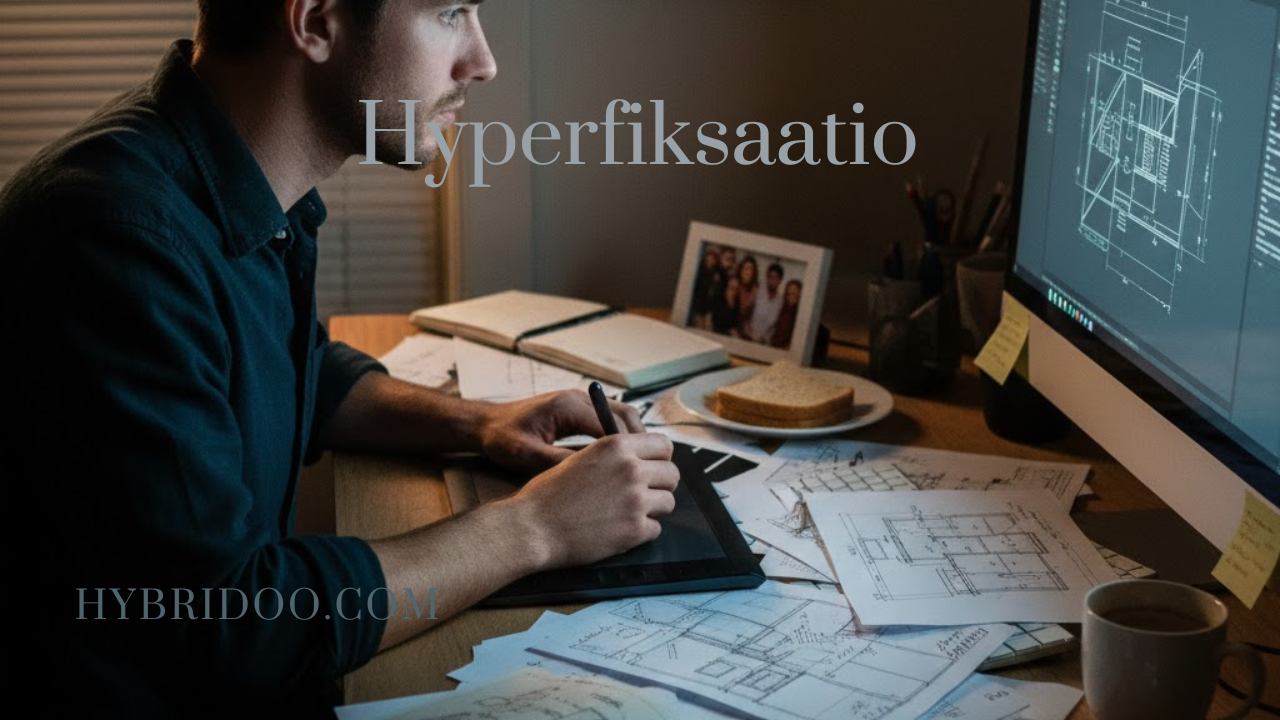
The brain cannot distribute attention equally across different tasks—it actively seeks rewarding and interesting experiences. Hyperfixation is a powerful manifestation of this natural mechanism, which can lead to both deep expertise and a disruption in the balance of daily life.
What is Hyperfixation?
Hyperfixation refers to an intense and prolonged absorption in a specific task, topic, or interest. In this state, a person can completely block out the surrounding world and neglect even basic needs like eating, drinking, or resting. Unlike short-term intense concentration, hyperfixation typically lasts from weeks to years and is often linked to a deep, innate interest.
Hyperfixation is not an official medical diagnosis but a phenomenon that occurs especially among neurodivergent individuals, such as those with ADHD or on the autism spectrum. However, it can also occur in neurotypical individuals during various stages of life.
Signs of Hyperfixation
Those who have experienced hyperfixation often report similar experiences:
-
Loss of time perception: Hours pass unnoticed when immersed in the subject of interest.
-
Forgetting basic needs: Eating, drinking water, personal hygiene, or sleeping may be entirely overlooked.
-
Neglecting social relationships: Family members, friends, or coworkers may not be listened to, or time spent with them may decrease significantly.
-
Overlooking other responsibilities: Household chores, schoolwork, or work projects may be left unfinished due to the focus of interest.
-
Difficulty shifting focus: It is often extremely difficult to “detach” from hyperfixation even when other obligations require it.
Neurodivergence and Hyperfixation
Hyperfixation is strongly linked to neurodivergence, particularly ADHD and autism.
ADHD and the Search for Dopamine: In the ADHD brain, the processing of dopamine—the chemical responsible for reward and motivation—is often atypical. Everyday tasks do not always provide enough dopamine reward to maintain focus, but highly interesting and rewarding activities can powerfully capture attention. Hyperfixation in ADHD is often the brain’s way of seeking a strong dopamine response.
Autism and Special Interests: On the autism spectrum, hyperfixation often appears as special interests. These deep and long-lasting interests can bring calming predictability and security to daily life, offering a way to process the surrounding world. Unlike with ADHD, where interests may change more rapidly, a special interest in the context of autism can remain the same for decades.
Other conditions where hyperfixation may occur include anxiety disorders, depression, obsessive-compulsive disorder (OCD), and trauma-related situations. In these cases, hyperfixation can be a coping mechanism through which a person avoids difficult emotions or life stressors.
Differences Between Hyperfixation, Hyperfocus, and Other Concentration Phenomena
Hyperfixation and hyperfocus are often confused, although they are distinct phenomena. The table below illustrates three key forms of concentration:
| Phenomenon | Duration | Nature | Potential Benefits | Potential Challenges |
|---|---|---|---|---|
| Hyperfixation | Weeks to years | Deep, long-term interest in a subject | Development of expertise, strengthening of identity | Loss of life balance, narrowing of social life |
| Hyperfocus | Minutes to hours | Short, intense immersion in a task | Efficient work, creative flow state, rapid learning | Forgetting basic needs, difficulty detaching from task |
| Microfocusing | Seconds to minutes | Focusing on small details | Precision, systematicity | Loss of the big picture, harmful perfectionism |
Hyperfocus is thus short-term, task-oriented, and goal-directed concentration that anyone can experience. Hyperfixation, on the other hand, is a long-term absorption directed at a topic or interest, which is often more difficult to manage.
What Kinds of Things Can One Become Hyperfixated On?
Hyperfixation subjects can be very diverse and vary greatly according to personal interests. Reviewing typical examples can make it easier to recognize one’s own experience.
Hobbies and Creative Pursuits:
-
Fandoms: Deep diving into the worlds of TV series, movies, book series, or bands, including learning character backstories and creating fan works.
-
Collecting: Collecting and categorizing rare objects, records, games, or other items.
-
Creative Projects: Craft projects, drawing, making music, or coding, where one can spend hours achieving “perfection.”
Entertainment and Media:
-
Gaming: Playing video games or studying game mechanics intensively, often forgetting time limits.
-
Content Consumption: Watching an entire TV series in a short time or “devouring” several books in a row.
-
Music: Deep diving into a specific genre or artist, including analyzing lyrics and following live performances.
Knowledge Acquisition:
-
Academic Fields: Deep diving into, for example, history, psychology, astronomy, or languages, often with near-academic level precision.
-
Theories and Conspiracies: Researching conspiracy theories, historical mysteries, or philosophical questions.
-
System Optimization: Optimization work done with productivity methods, financial systems, or daily organization.
Practical Tips for Managing Hyperfixation
Hyperfixation in itself is neither “bad” nor “good”—it is an individual trait that can bring both deep satisfaction and challenges in achieving daily balance. The practical tips below help manage the effects of hyperfixation on daily life:
1. Set Time Limits and Goals
-
Use a timer or audio cue to remind you of breaks and other tasks.
-
Set concrete, achievable goals related to your hyperfixation so it doesn’t consume all your time.
2. Maintain Social Relationships
-
Consciously schedule time with friends and family, even if it initially feels challenging.
-
Explain to your loved ones what hyperfixation is so they can better understand your situation.
3. Exercise and Physical Well-being
-
Exercise can help balance concentration and provide a healthy channel for energy.
-
Remember basic needs: set reminders for food, water intake, and rest.
4. Develop Routines
-
Systematic daily routines help transition between hyperfixation and other tasks.
-
Start the day with the most important obligations and allocate time for hyperfixation only afterwards.
5. Seek Professional Help if Needed
-
If hyperfixation significantly hinders daily functioning, education, work, or relationships, consulting a professional is recommended.
-
Therapy, such as cognitive-behavioral therapy, can help understand and manage the effects of hyperfixation.
-
Contact, for example, a health center, psychiatric outpatient clinic, or private psychotherapist.
Hyperfixation as Part of Neurodiversity
Hyperfixation is not a standalone phenomenon but part of broader neurodivergent traits related to focus and processing. Hypersensitivity (sensory over-responsivity), hyper-empathy (intense empathy), and hyperactivity are often linked to hyperfixation and can influence how a person experiences and manages their focus.
It is important to remember that these traits are not just challenges—they can also be strengths. Hyperfixation often leads to exceptional expertise, creativity, and deep understanding. Many neurodivergent artists, researchers, or professionals have found success precisely because of their ability to delve exceptionally deeply into their interests.
In Conclusion: Finding Balance
Hyperfixation is a complex phenomenon that requires individual understanding and approach. It can be both a superpower and a maze—the same intense focus can lead to both deep satisfaction and the challenging of daily balance.
The essential thing is to learn to recognize the signs of hyperfixation, accept it as part of one’s own neurological profile, and develop skills for managing it. Well-managed, hyperfixation can be a source of joy, creativity, and expertise.
If you recognize traits of hyperfixation in yourself and they hinder your life, it is worth seeking support. Talking with a therapist, doctor, or other professional can help find more balanced ways to handle the intensity of focus. Remember, seeking help is a show of strength, not weakness.