
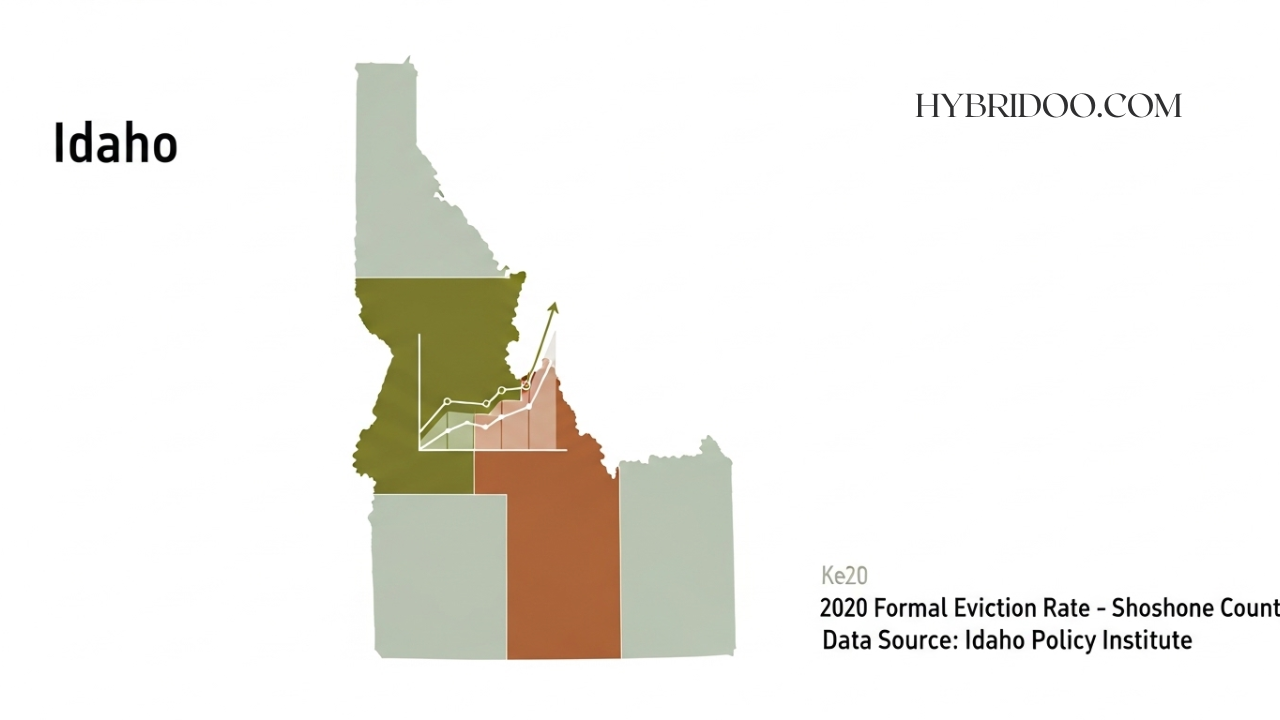
The year 2020 was a crucible for housing stability across the United States. In Idaho, understanding the complex interplay between a global pandemic, economic upheaval, and policy responses required precise, localized data. A critical resource for this understanding came from the Idaho Policy Institute, whose research provided a clear-eyed view of housing precarity at the county level. This article offers a comprehensive analysis of the Idaho Policy Institute formal eviction rate 2020 Shoshone County findings. We will explore what the data reveals about tenant-landlord dynamics in this unique region, the contextual factors at play, and the long-term implications for housing policy in rural Idaho.
Understanding the Source: The Idaho Policy Institute and Eviction Metrics
To properly interpret the Shoshone County eviction rate, we must first understand the source and the metric. The Idaho Policy Institute (IPI), based at Boise State University, is a nonpartisan public policy research organization dedicated to providing data-driven analysis on issues critical to the state.
Their reporting on “formal eviction rates” specifically refers to court-filed eviction actions per 100 renter households. This is a crucial distinction. It captures legal, documented proceedings but does not account for “informal evictions”—situations where tenants leave under threat or coercion without a court filing. In 2020, this metric became even more significant as federal, state, and local moratoriums, like the CDC’s order, sought to alter the usual course of housing litigation. Therefore, the IPI 2020 housing data serves as a key benchmark for measuring the initial impact of these unprecedented policies.
The Context: Shoshone County’s Unique Economic Landscape
Interpreting the Idaho Policy Institute formal eviction rate 2020 Shoshone County data requires a deep dive into the county’s distinctive profile. Nestled in the Idaho Panhandle, Shoshone County is defined by its rugged terrain, dense forests, and a history deeply rooted in hardrock mining—the famed “Silver Valley.”
-
Economic Drivers: Historically dominated by mining (silver, lead, zinc), the economy has diversified into timber and a growing but seasonal tourism sector. This economic base can lead to employment volatility tied to commodity prices.
-
Demographics and Housing Stock: The county is rural with a relatively small, and slightly aging, population. The housing stock includes older homes, with a mix of single-family rentals and multi-unit buildings in towns like Kellogg, Wallace, and Mullan. The rental market is often tight, with limited new construction.
-
Pre-Pandemic Housing Stress: Even before 2020, many rural counties like Shoshone faced challenges with housing affordability relative to local wages, particularly for low-income households. This existing precarity set the stage for the pandemic’s impact.
Analyzing the 2020 Formal Eviction Rate for Shoshone County
According to the Idaho Policy Institute formal eviction rate 2020 Shoshone County analysis, the data presents a nuanced picture. While statewide eviction filings saw a notable drop in 2020 due to moratoriums and emergency rental assistance, rural counties often experienced different pressures.
Key Findings from the Data:
-
Relative Rate Compared to State: Shoshone County’s formal eviction filing rate in 2020 was typically lower than more populous, urban counties in Idaho. However, this raw number must be contextualized by its smaller renter population and different market dynamics.
-
The “Informal Eviction” Gap: In tight-knit rural communities, housing disputes may less frequently reach the formal court system. Pressures could lead to informal agreements or tenants leaving without a filing, a factor the formal rate cannot capture. The IPI research often highlights this as a data limitation statewide.
-
Impact of Aid and Moratoriums: The federal eviction moratorium provided a direct, if temporary, shield for qualified tenants. The rollout and uptake of emergency rental assistance (ERA) programs, administered locally, played a critical role in mediating disputes and keeping households in place, potentially suppressing the formal eviction rate in Shoshone County.
Factors That Influenced Eviction Dynamics in Shoshone County in 2020
Several intersecting factors shaped the 2020 Shoshone County housing landscape reflected in the IPI data:
-
Economic Disruption: Job losses in service and tourism sectors impacted many renters. While some industries remained stable, the economic shock was not evenly felt.
-
Access to Information and Resources: The effectiveness of moratoriums and rental assistance depended on tenants and landlords being aware of them. Outreach in rural areas can be challenging, potentially leaving some households unprotected.
-
Landlord Composition: The county’s rental market includes both small “mom-and-pop” landlords and larger property management entities. Small landlords, without their own mortgage forbearance options, may have faced significant cash flow pressures, creating tension even with moratoriums in place.
-
Court Operations: Like many jurisdictions, Shoshone County courts faced disruptions and backlogs, which may have delayed filings and hearings, technically affecting the timing of the formal eviction rate data.
Beyond 2020: The Lasting Implications and Current Housing Climate
The Idaho Policy Institute formal eviction rate 2020 Shoshone County report is not just a historical snapshot; it’s a baseline for understanding ongoing challenges.
-
The Cliff After the Moratorium: When federal protections eventually lapsed, there was concern about a surge in filings. The data from 2021 and 2022 was essential to see if rental assistance and economic recovery prevented a crisis.
-
Soaring Housing Prices: The post-2020 Idaho housing market saw unprecedented price increases. While Shoshone County is more affordable than the Boise area, rising home values and increased outside demand can pressure rental markets, leading to higher rents and reduced vacancy.
-
The Essential Role of Data: The IPI’s work underscores that effective local policy—whether for homelessness prevention, landlord mediation, or directing housing funds—requires hyper-local data. Understanding the Shoshone County eviction rate helps non-profits, legal aid societies, and county commissioners advocate for and allocate resources effectively.
The Critical Importance of Localized Housing Data
The story of the Idaho Policy Institute formal eviction rate 2020 Shoshone County is, at its core, a story about the power of localized data. Statewide averages often mask the realities of rural communities. For policymakers and advocates in North Idaho, this granular data is invaluable because it:
-
Informs Targeted Interventions: It helps identify whether the need is for more legal assistance, better landlord-tenant mediation services, or increased funding for direct rental aid.
-
Measures Policy Effectiveness: It provides a benchmark to assess whether new programs or funding allocations are actually moving the needle on housing stability.
-
Elevates Rural Voices: It ensures that the unique housing challenges of counties like Shoshone are represented in statewide housing conversations and funding decisions.
A Call to Action for Stakeholders in Shoshone County and Beyond
The findings from the Idaho Policy Institute formal eviction rate 2020 Shoshone County report are more than numbers; they are a guide for action. Here is how different community stakeholders can use this information:
-
For Tenants: Stay informed about your rights and resources. Seek out local legal aid or housing non-profits if you face instability. Understanding past data emphasizes the importance of seeking help early.
-
For Landlords: Explore programs that partner with local agencies to provide rental assistance and mediation. Maintaining stable tenancies is often more cost-effective than turnover.
-
For Local Policymakers & Advocates: Continue to support and utilize granular research from institutions like the IPI. Advocate for housing solutions tailored to the rural context, such as incentives for affordable development and sustained funding for emergency rental assistance programs.
-
For Community Members: Engage with local housing authorities and attend county meetings where housing issues are discussed. Support local non-profits that provide direct housing services.
Housing stability is the foundation of community health, educational success, and economic vitality. By learning from the 2020 data and continuing to monitor trends, Shoshone County can build a more resilient and equitable housing future.