
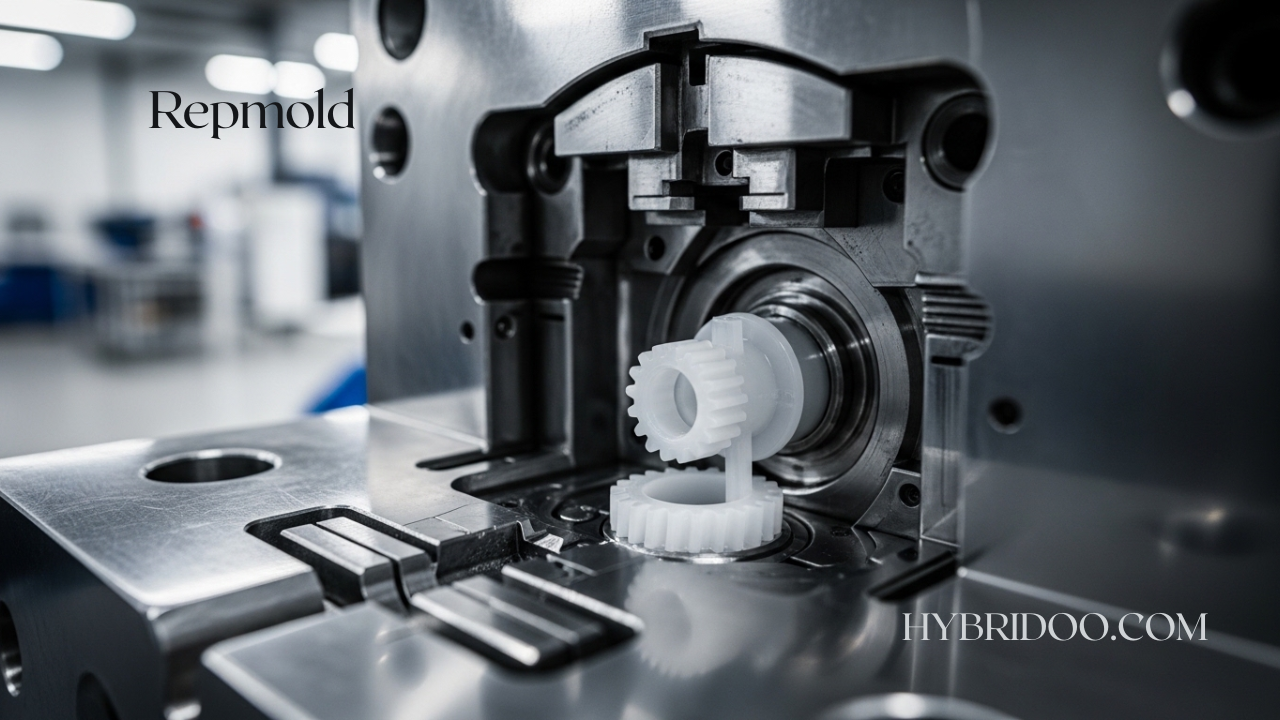
In the high-stakes world of manufacturing, where precision is profit and consistency is king, there exists a critical yet often overlooked bridge between a brilliant design and mass production. That tool is the repmold—or reproduction mold.
If you’re involved in product development, injection molding, or any form of replicated production, understanding the repmold process is not just technical jargon; it’s a fundamental lever for controlling quality, cost, and scalability. This deep dive will explore what a repmold truly is, why it’s indispensable, its creation process, and how it can be the strategic advantage your next project needs.
What is a Repmold? Demystifying the Term
At its core, a repmold is a duplicate or reproduction of an original production mold. Let’s break that down:
-
The Original Mold (Master Mold): This is the first, often meticulously hand-finished and polished mold created from the product’s CAD design.
-
The Repmold: Once the design is validated using parts from the master mold, a repmold is created. It is an exact—or sometimes enhanced—copy of that master, intended for high-volume production runs.
Think of it like publishing a book. The author’s original, edited manuscript is the “master mold.” The repmold is the printing plate used to produce thousands of identical copies for bookstore shelves. You wouldn’t use the one-of-a-kind manuscript to print every book; similarly, you use a repmold to protect your investment and ensure consistent output.
Why Use a Repmold? The Strategic Advantages
Investing in a repmold isn’t an extra step; it’s a calculated move for operational excellence. Here are the compelling reasons why this process is standard in serious manufacturing.
-
Preserving the Master Mold: The master mold is a valuable asset, often incorporating delicate textures, complex actions, or specialized steels. Using it for a 1-million-part run subjects it to immense wear. A repmold takes on the brunt of production, preserving the integrity and longevity of the master for future reproductions or modifications.
-
Enabling Parallel Production: Need to meet a tight deadline or ramp up capacity? Multiple repmolds can be created from a single master and run simultaneously on different machines. This parallel production is impossible with a single mold and is the key to scaling output efficiently.
-
Risk Mitigation and Business Continuity: If a production mold fails due to damage or wear, having a repmold on standby minimizes downtime. You’re not scrambling to repair a single point of failure; you simply activate the duplicate, ensuring your production line keeps moving.
-
Cost-Effectiveness for Long Runs: While creating a repmold adds an upfront cost, it often proves cheaper in the long run. Repmolds can be made from more durable, production-grade materials and with optimized cooling channels, leading to faster cycle times and lower cost-per-part over high volumes.
-
Geographic Flexibility: Companies can create a master mold at a development facility and then produce repmolds for manufacturing plants in different regions. This streamlines global supply chains and reduces shipping costs for heavy production tools.
The Repmold Creation Process: From Master to Duplicate
Creating a high-fidelity repmold is a precise art and science. It’s not simply copying; it’s about capturing every detail and often improving upon the original for production. The standard workflow involves several critical stages:
1. Master Mold Preparation & Data Capture:
The process begins with the validated master mold. Modern techniques often use high-resolution 3D scanning or Coordinate Measuring Machine (CMM) data to create a perfect digital record of the master’s cavity and core. This “digital twin” is the blueprint for the repmold.
2. Design Review & Potential Enhancements:
This is a key value-add phase. Engineers review the digital model to identify opportunities to enhance the repmold for production. Common enhancements include:
-
Improved Cooling Channels: Optimizing cooling line layout and diameter to reduce cycle time.
-
Strengthened Features: Adding material to vulnerable areas like thin walls or sharp corners to prevent premature wear.
-
Surface Finish Standardization: Ensuring the texture or polish is consistent and reproducible across all cavities in a multi-cavity repmold.
3. Machining the Repmold Base:
The digital data from the master mold guides the cutting tools to create the negative cavities and cores. This stage requires extreme precision, often to within microns.
4. Finishing, Texturing, and Assembly:
After rough and finish machining, skilled mold makers perform hand polishing or apply specific surface textures (e.g., leather grain, matte finish).
5. Sampling and Validation (T0 Trial):
The first articles from the new repmold are produced in a trial run. These parts are meticulously measured and compared against the parts from the master mold and the original CAD specifications. Any deviations are corrected before the repmold is approved for mass production.
Key Considerations When Commissioning a Repmold
Not all repmold projects are the same. To ensure success, address these factors with your mold-making partner:
-
Volume Requirements: The expected production quantity dictates the steel quality and hardness. A repmold for 500,000 parts will differ from one for 5 million.
-
Material Selection: The plastic resin you plan to use (e.g., abrasive glass-filled nylon, corrosive PVC) influences the choice of stainless steel or hardened tool steels for the repmold.
-
Cavitation: Will your repmold be a single cavity duplicate, or will you take the opportunity to create a multi-cavity mold (2, 4, 8 cavities) to multiply output from a single machine cycle?
-
Partner Expertise: Choose a molder or toolmaker with proven experience in repmold creation. Their ability to accurately capture data, machine precisely, and suggest enhancements is paramount.
Repmold vs. Other Mold Types: Clarifying the Landscape
It’s easy to confuse related terms. Here’s how a repmold fits in:
-
Repmold vs. Master Mold: The master is the first-generation original; the repmold is its production-ready duplicate.
-
Repmold vs. Family Mold: A family mold produces different parts (e.g., a bottle cap and its collar) in one cycle. A repmold produces identical parts.
-
Repmold vs. Production Mold: This is often a semantic difference. A repmold is a production mold, but the term specifically highlights its genesis as a copy.
Conclusion: Is a Repmold Strategy Right for Your Project?
The decision to invest in a repmold hinges on your project’s scale, longevity, and risk tolerance. If you are moving beyond prototypes and pilot runs into sustained, high-volume manufacturing, a repmold is not an expense—it’s an insurance policy and a productivity engine.
It safeguards your core intellectual property (the master mold), unlocks scalable and parallel production, and ultimately delivers a lower total cost of ownership for your molded parts. By ensuring every unit that comes off the line meets the exact standard of the first, the repmold becomes the silent guardian of your brand’s quality and reliability.