
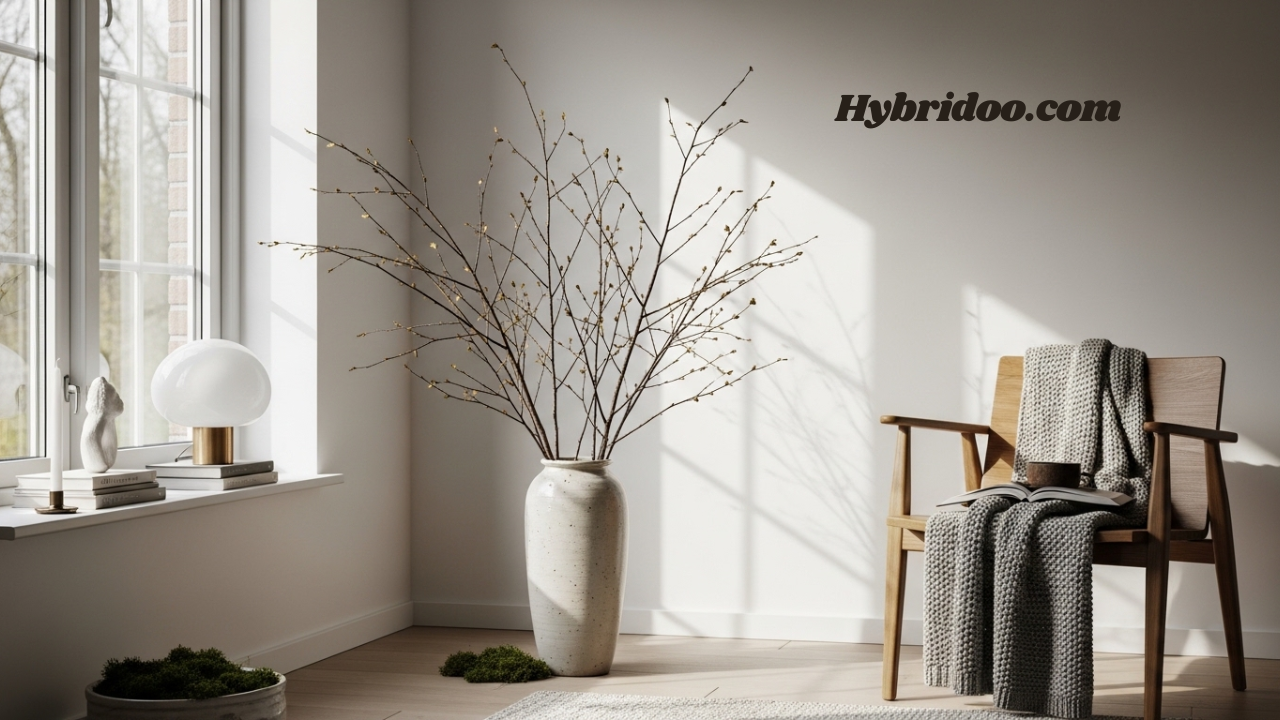
There is a quiet magic in the way a single, leafless branch can transform a room. In a world often cluttered with mass-produced ornaments, the Scandinavian design tradition offers a breath of fresh air—literally and figuratively. If you have ever gazed at a perfectly styled Nordic interior and wondered how it achieves that effortless balance of warmth and minimalism, the secret often lies in the details. More specifically, it lies in pyntekvister.
This Norwegian term, which charmingly translates to “decorative twigs” or “ornamental branches,” represents a design philosophy that is as simple as it is profound . It is about inviting nature indoors, not in an overwhelming way, but as a sculptural element that adds texture, height, and a sense of calm to your personal sanctuary. Whether you are a seasoned interior design enthusiast or a beginner looking to refresh your space on a budget, understanding the art of pyntekvister can fundamentally change how you view home decor.
What Exactly Are Pyntekvister?
At its core, pyntekvister involves using branches—either natural, dried, or artificial—as decorative objects . They are typically arranged in vases, hung on walls, or used as centerpieces. Unlike a lush bouquet of flowers that demands attention and constant care, pyntekvister whispers. They offer understated beauty, relying on form, texture, and contrast to make an impact .
The practice is deeply rooted in Nordic culture, where the connection to nature is a way of life. Historically, families used branches during winter festivities, adorning them with candles to bring light to the dark months. In spring, budding twigs symbolized renewal and fertility . Today, this tradition has evolved into a global trend, embraced for its sustainability, versatility, and alignment with the principles of biophilic design—the innate human desire to connect with nature .
Why Pyntekvister is the Ultimate Decor Trend
In 2025, the appeal of pyntekvister has only grown stronger. As we seek to create sanctuaries of peace in our homes, these natural elements offer a unique set of benefits:
-
Sustainability: Dried branches can last for years. When you are finally done with them, they are compostable, creating zero waste . By foraging responsibly, you are engaging in a zero-cost, eco-friendly decorating practice.
-
Low Maintenance: Unlike fresh flowers that wilt, pyntekvister requires no water. A simple dusting with a microfiber cloth or a soft brush is all they need to stay beautiful .
-
Cost-Effective: A few carefully chosen branches can look more elegant than an expensive floral arrangement. Nature provides the materials for free, or affordable options are widely available at craft stores .
-
Versatility: Whether your home is minimalist, rustic, boho, or modern, there is a branch for that. You can paint them, light them, or leave them raw—they adapt to your style, not the other way around .
Choosing the Right Branches
While you could grab any stick from the backyard, choosing branches with intention elevates your display from “random twigs” to “intentional art.” Here are some of the most popular types of pyntekvister used by interior designers:
-
Birch: The quintessential Nordic choice. Its pale bark and delicate structure bring a light, airy feel to any room. It is perfect for minimalist and Scandi-style interiors .
-
Willow: Known for their long, flexible, and sometimes twisted forms, willow branches add a dynamic, sculptural element. They look stunning in tall vases and can even be bent into wreaths .
-
Eucalyptus: This option bridges the gap between a branch and a bouquet. With its muted grey-green leaves and soothing scent, eucalyptus adds a touch of softness and works beautifully in bedrooms or bathrooms to create a spa-like atmosphere .
-
Cherry Blossom: Unbeatable for spring, cherry branches with buds or soft pink blooms bring a seasonal pop of color and symbolize renewal .
-
Dogwood: For a bold, colorful statement, red or yellow dogwood branches are incredible, especially in winter when their vibrant bark stands out against a stark, neutral background .
How to Style Pyntekvister in Your Home
The beauty of pyntekvister lies in its simplicity, but a few guiding principles can help you achieve a professional look. The key is to think of branches as sculptures.
The Living Room: Vertical Drama
Use tall branches in a floor vase placed next to a sofa, fireplace, or in a bare corner. This draws the eye upward, emphasizing ceiling height and adding architectural interest without cluttering the floor space. Choose a textured ceramic or a matte black vase to ground the arrangement .
The Dining Room: An Intimate Centerpiece
For a dining table, keep the arrangement low so it doesn’t obstruct conversation. A shallow bowl with short, crisscrossed twigs, moss, and a few dried berries creates an intentionally modern and organic look .
The Bedroom: A Calming Accent
Bring a sense of peace to your nightstand. One slim, elegant branch in a small glass bottle is easier to dust than a bouquet of flowers and provides a serene focal point to wake up to .
The Entryway: A Welcoming Gesture
First impressions matter. A tall, narrow vase with a sparse, sculptural branch by the front door looks intentional and inviting. It signals a connection to nature the moment you—or your guests—walk in .
DIY: Creating Your Own Seasonal Masterpiece
One of the most satisfying aspects of pyntekvister is making it yourself. It’s a chance to personalize your decor and engage in a mindful, creative hobby. Here is a simple guide to get you started.
Step 1: Gather Your Materials
-
Branches: Collect fallen branches from a park or your yard (ensure they are dry and pest-free). Birch, willow, and hazel are great options .
-
Tools: Pruning shears, a glue gun, floral wire, and a soft brush for cleaning .
-
Decorations (Optional): Spray paint, LED fairy lights, ribbons, dried flowers, or small ornaments .
Step 2: Prepare Your Base
Clean the branches with a soft brush to remove dirt and loose bark. Use pruning shears to trim them to varying heights. Pro tip: When arranging, group branches in odd numbers (three or five stems) as this is visually more appealing and balanced than even numbers .
Step 3: Get Creative
-
For a Modern Look: Spray paint the branches matte black, white, or a metallic color. This creates a bold, graphic statement that pops against a neutral wall .
-
For a Cozy Winter Glow: Wrap LED fairy lights around the branches. Place them in a clear glass vase to create a magical, soft lighting element for dark evenings .
-
For Spring: Dip the tips of the branches in pastel paint or glue on small fabric flowers to mimic buds .
Step 4: Display with Intention
Place your creation in a sturdy vase. If the branches are top-heavy, add stones, sand, or marbles to the bottom of the vase to weigh it down and keep them secure .
Seasonal Styling Guide
One of the greatest strengths of pyntekvister is its ability to evolve with the calendar. It allows you to celebrate the changing seasons without a complete decor overhaul.
-
Spring: Choose budding cherry or apple branches. Decorate with pastel ribbons, small feathers, or painted eggs for Easter .
-
Summer: Opt for leafy green branches or bleached driftwood. Pair them with seashells or dried grasses for a light, airy feel .
-
Autumn: Use branches with warm tones. Wrap them with copper wire and add small pinecones, acorns, or berries in shades of orange and red .
-
Winter: Spray birch branches white for a frosted look. Adorn them with silver ornaments, dried orange slices, or LED lights to bring a festive, hygge-inspired warmth indoors .
Common Mistakes to Avoid
Even with a simple concept, there are a few pitfalls that can diminish the impact of your pyntekvister.
-
Overcrowding: The essence of this trend is minimalism. Branches need space to “breathe.” A sparse arrangement allows the eye to appreciate the individual lines and shapes of each branch .
-
Ignoring Scale: A tiny vase with tiny branches will get lost on a large dining table. Conversely, a massive, dramatic branch will overwhelm a small nightstand. Match the scale of the arrangement to the size of the furniture and the room .
-
Poor Stability: Tall branches in a light, top-heavy vase are a recipe for disaster. Always use a weighted vase or add heavy materials to the bottom to prevent tipping .
-
Clashing Colors: While you can paint your branches, ensure the color harmonizes with the room’s palette. A bright, neon branch might fight for attention in a room full of soft, muted earth tones .
The Therapeutic Power of Nature Indoors
Beyond aesthetics, pyntekvister offers a psychological benefit. In our fast-paced, digital world, bringing elements of nature indoors has been shown to reduce stress and increase feelings of well-being . The act of foraging for branches can be a therapeutic walk in nature, and the process of arranging them is a form of mindfulness. It is a simple, tactile way to slow down and engage with the physical world.
Pyntekvister is more than just decor; it is a way to tell a story. Each branch, with its unique twists and turns, carries the memory of the forest, the wind, and the rain. By placing it in your home, you are not just filling a space—you are creating a dialogue between your interior life and the natural world.