
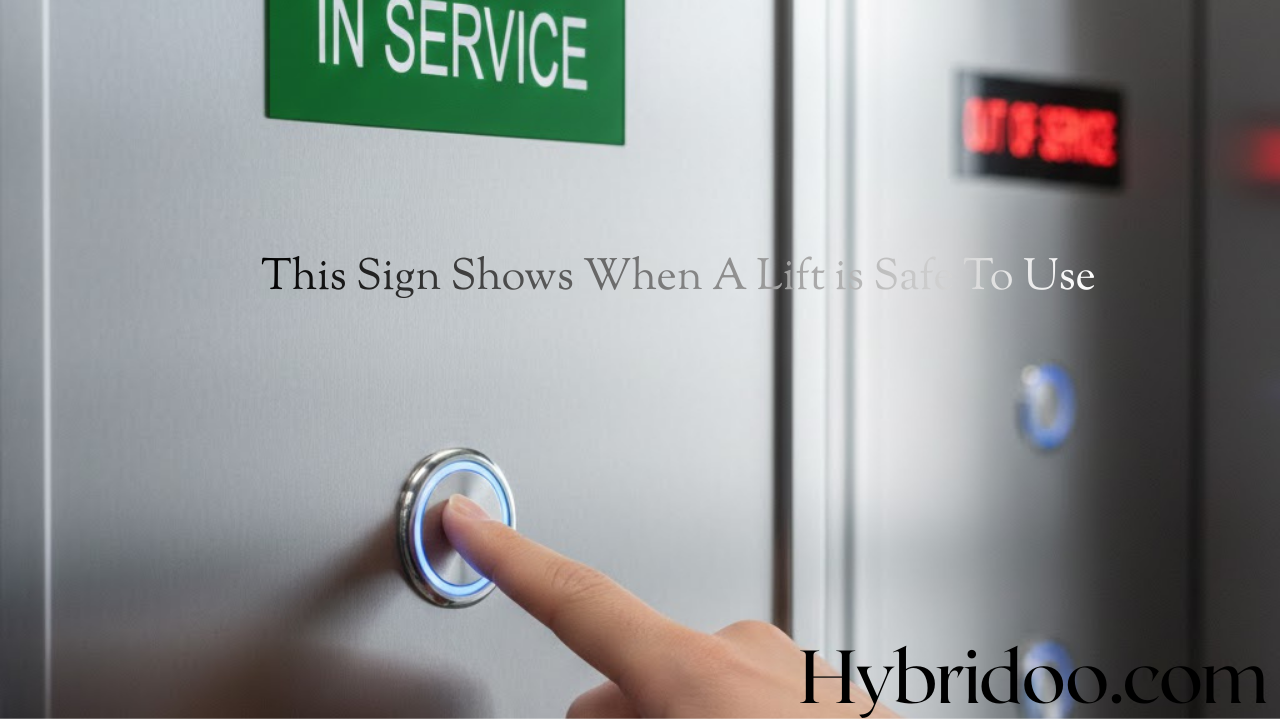
Walking up to an elevator, have you ever hesitated, wondering if it’s truly safe to step inside? That moment of uncertainty is precisely why elevator safety signs exist. They are the silent guardians of vertical transportation, providing clear, immediate visual communication about the operational status of the lift. Understanding these signs isn’t just about convenience—it’s a critical component of personal and public safety. This comprehensive guide will decode the universal language of elevator signage, empowering you to confidently identify when a lift is safe to use.
The Universal Symbol of Safety: The “In Service” Sign
The most important sign for any elevator user is the “In Service” or “Operational” indicator. This is the primary sign [that] shows when a lift is safe to use.
-
What it looks like: Typically, this is a green-lit sign or a clearly marked plaque with text reading “IN SERVICE” or “OPERATIONAL.” Often, the green light is placed above or directly next to the elevator door. In some modern elevators, a green LED light ring around the call button serves the same function.
-
What it means: A lit green “In Service” sign shows the lift has passed its latest safety checks and is functioning normally. It indicates that all systems—brakes, doors, alignment, and emergency controls—are within safe operational parameters. When you see this sign, it is the elevator’s way of giving you a green light to proceed.
This simple, color-coded system is designed for instant recognition. Green means “go”—it is safe to enter, select your floor, and travel.
Beyond Green: Other Crucial Safety Signs and Their Meanings
While the green “In Service” sign is the primary all-clear, several other signs provide vital safety information. A truly safety-conscious user learns this entire visual vocabulary.
1. The “Out of Service” or “Do Not Use” Sign
This is the direct opposite of the in-service indicator and is non-negotiable.
-
Appearance: A red sign, often with bold white or black text saying “OUT OF SERVICE,” “DO NOT USE,” or featuring a universal “No Entry” symbol (a red circle with a diagonal line).
-
Implication: This sign shows the lift is NOT safe to use. It may be undergoing routine maintenance, repair, or has been taken offline due to a detected fault. Never ignore a red “Out of Service” sign. Attempting to use a marked elevator can lead to entrapment, injury, or can interfere with crucial repair work.
2. The Inspection Certificate
This is the elevator’s official “report card.”
-
Location: Usually found inside the elevator car, framed on a wall.
-
Contents: It lists the last official inspection date, the next due date, the inspection company, and a unique elevator ID number. A valid, up-to-date inspection certificate is a key sign that the lift is safe for use. If the certificate is expired, it’s a red flag that the elevator may not be under proper regulatory supervision, even if it appears to be running.
3. Capacity and Emergency Signs
-
Capacity Plate: Located inside the car, this states the maximum weight (e.g., 1000 kg) or person limit (e.g., 8 persons). Overloading an elevator is a direct safety hazard, stressing cables and braking systems.
-
Emergency Instructions: These signs outline steps to take if you are trapped, including the use of the alarm button or emergency telephone. Knowing where this information is located before an incident is a smart safety practice.
Why These Signs Are Non-Negotiable for Your Safety
Elevators are complex machines governed by physics and engineering. The signs on and in them are the direct result of stringent safety regulations designed to prevent accidents.
-
Preventing Entrapment: An “Out of Service” sign is often placed during maintenance that could cause unexpected movement or door operation. Heeding it prevents you from being trapped between floors.
-
Avoiding Catastrophic Overload: The capacity sign isn’t a suggestion. Exceeding it can cause the elevator to stall or, in extreme cases, lead to a dangerous cable or brake failure.
-
Ensuring Professional Oversight: The inspection certificate confirms that a qualified professional has examined the lift’s critical systems—a fundamental sign that the lift is safe to use on a regulatory level.
Ignoring these signs turns a controlled, safe system into an unpredictable risk. The signs are your first and best line of defense.
What to Do When Safety Signs Are Missing, Unclear, or Contradictory
Sometimes, the signage itself can be a problem. Here’s how to handle ambiguous situations:
-
No Clear “In Service” Sign: If the status is unclear (e.g., no green light, but the doors open), err on the side of caution. Look for other indicators. Is the elevator level with the floor? Do the doors operate smoothly? If in doubt, use the stairs or another lift, and report the unclear signage to building management.
-
Conflicting Signals: This is a critical red flag. For example, if the doors open but a small “Out of Service” sign is partially visible inside the car, DO NOT ENTER. The door mechanism may be operational while other critical systems are not. A lit floor button is not a sign that shows the lift is safe to use—the official status indicators are.
-
Expired Inspection Certificate: This is a serious regulatory issue. While the elevator may function, an expired certificate means its legal safety approval has lapsed. Report this immediately to building management or the property owner.
The Role of Maintenance and Professional Inspection
The signs we see are the surface layer of a deep safety infrastructure. Behind the scenes, regular maintenance by certified technicians is what keeps the green light on.
-
Routine Maintenance: Scheduled visits to lubricate, adjust, and test components.
-
Periodic Inspections: Mandated, in-depth examinations by a licensed inspector, often annually, which result in the updated certificate.
When a technician places a red “Out of Service” sign, they are performing this essential work. Your compliance with that sign is what allows them to complete repairs safely, ultimately ensuring the elevator’s long-term reliability for everyone.
Elevator Safety Sign Cheat Sheet
| Sign / Indicator | Color / Key Feature | What It Means | Your Action |
|---|---|---|---|
| In Service | Green light or clear text | The lift is operating normally and safely. | It is safe to enter and use. |
| Out of Service | Red color, “Do Not Use” text | The lift is under repair/maintenance or faulty. | DO NOT USE. Find an alternative. |
| Inspection Certificate | Framed document inside the car | Shows the last official safety inspection date. | Verify it is current. If expired, report it. |
| Capacity Plate | Metal plate inside the car | States the maximum safe weight/number of people. | Do not exceed this limit. |
| Emergency Info | Posted inside the car | Instructions for alarm & phone use if trapped. | Familiarize yourself with it now. |
Your Safety Checklist Before Stepping In
Cultivate a quick, 10-second safety habit every time you use an elevator:
-
Look for the Green Light: Confirm the primary sign shows the lift is safe to use.
-
Check the Doors: Ensure they open and close fully and smoothly.
-
Note the Leveling: The elevator car floor should be even with the building floor.
-
Glance Inside: Once doors open, take a quick look for any obvious “Out of Service” notices inside or signs of damage.
A Strong Call to Action: Be an Informed and Proactive User
Your safety is an active partnership. Don’t just be a passenger—be a participant in elevator safety.
-
LOOK. Make it a habit to actively observe the safety signs every single time. They are there for you.
-
OBEY. Respect every “Out of Service” sign and capacity limit without exception.
-
REPORT. If you see damaged signage, an expired certificate, or an elevator behaving erratically (odd noises, jerking, misleveling), report it to building management immediately. You could prevent the next incident.