
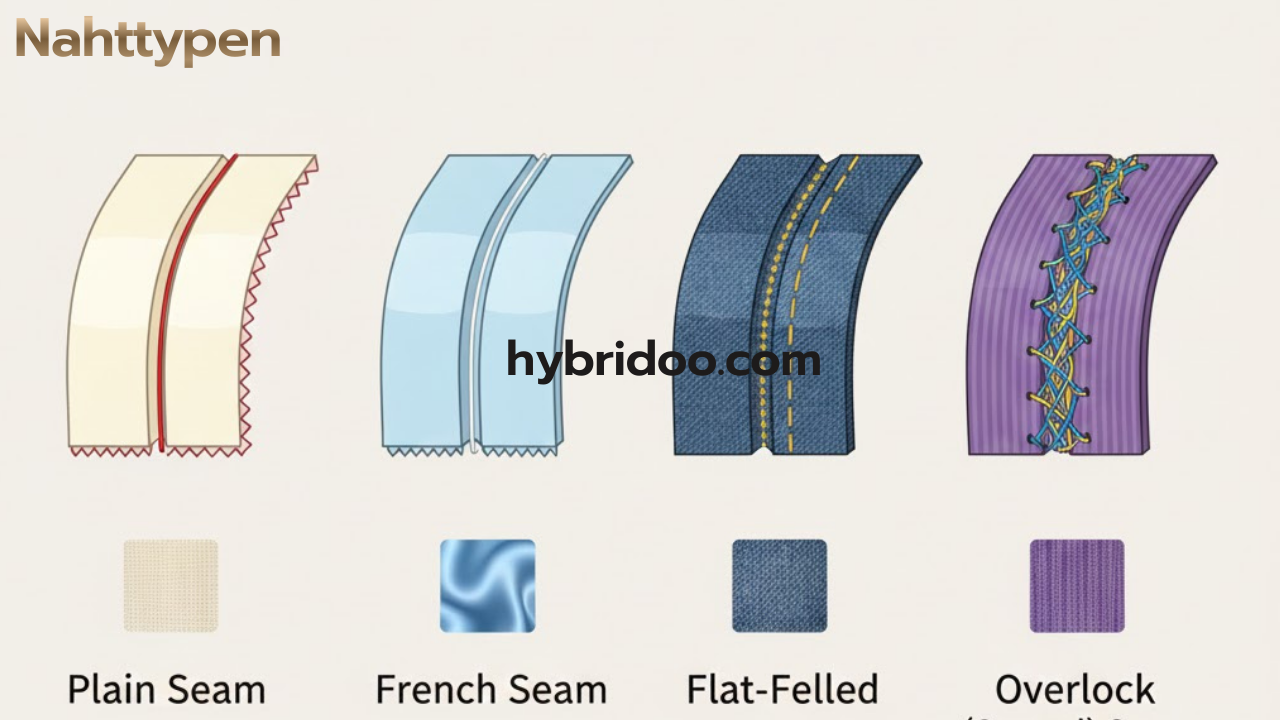
Whether you’re just starting your sewing journey or you’re a seasoned textile designer, understanding Nahttypen—the German term for seam types—is fundamental to elevating your craft from amateur to professional. Seams are far more than simple stitches holding fabric together; they are the structural backbone of every garment and textile project, determining its durability, comfort, functionality, and ultimate aesthetic appeal.
Choosing the wrong seam can lead to premature wear, discomfort, or a compromised design. This comprehensive guide will walk you through the essential Nahttypen, their unique applications, and the critical factors to consider when selecting the perfect seam for any project. By mastering this knowledge, you empower yourself to create pieces that are not only beautiful but also built to last.
Why Nahttypen Matter: More Than Just a Stitch
A seam’s primary function is to join fabric, but its role extends much further. The right Nahttyp directly influences a garment’s longevity and performance. A well-chosen and well-executed seam prevents fraying, withstands daily stress from movement and washing, and maintains the garment’s shape over time.
Furthermore, seams significantly impact wearer comfort. Bulky or poorly finished seams can cause irritation, especially in areas like underarms or along the neckline. In contrast, flat or enclosed seams lie smoothly against the skin, which is crucial for activewear, lingerie, and children’s clothing. Finally, seams are a powerful design element. From the visible top-stitching on denim to the completely hidden seams in a silk blouse, the choice of seam contributes profoundly to the garment’s final look and perceived quality.
Essential Nahttypen and Their Applications
Different projects and fabrics demand different seam techniques. Here’s a breakdown of the most important Nahttypen every sewist should know.
1. The Plain Seam (Standardnaht)
The most basic and common of all seams. Fabric pieces are placed with right sides together and stitched along the seam allowance, which is then pressed open.
-
Best For: Woven, non-stretch fabrics like cotton, linen, and medium-weight materials.
-
Pros: Simple, quick, and clean. Serves as the foundation for many other seam finishes.
-
Cons: Raw edges are exposed and will fray if not finished with an additional method like pinking, zigzag stitching, or serging.
2. The French Seam (Französische Naht)
An elegant, enclosed seam that hides all raw edges within a double line of stitching. It is sewn in two steps: first with wrong sides together, then trimmed, folded, and stitched again with right sides together.
-
Best For: Sheer, lightweight, and delicate fabrics such as chiffon, organza, silk, and fine linens where fraying is a concern and a clean interior finish is desired.
-
Pros: Extremely neat, durable, and prevents fraying without additional tools. It gives a high-end, professional look to the inside of a garment.
-
Cons: More time-consuming and uses slightly more fabric. It can be too bulky for heavy materials.
3. The Flat-Felled Seam (Kappnaht)
Recognizable as the strong seam on denim jeans, this durable technique encases raw edges with two parallel rows of visible top-stitching. One layer of seam allowance is trimmed, and the wider allowance is folded over it before being stitched down.
-
Best For: Heavy-duty fabrics like denim, canvas, and twill. Ideal for workwear, jackets, and any item requiring exceptional strength.
-
Pros: Extremely robust, resistant to fraying, and offers a neat finish on both sides.
-
Cons: The process is more complex and creates a thicker, less flexible seam that may not be suitable for lightweight or stretchy fabrics.
4. The Overlock (Serger) Seam
Created using a specialized overlock or serger machine, this seam trims the fabric edge, sews the pieces together, and overcasts the edge in one swift, simultaneous action.
-
Best For: Knits, jersey, and stretch fabrics commonly used in T-shirts, activewear, and casual garments.
-
Pros: Highly efficient, prevents fraying perfectly, retains fabric stretch, and gives a ready-to-wear, professional appearance.
-
Cons: Requires a specific machine (a serger). The stitching is usually visible and can be difficult to remove for alterations.
The table below provides a quick-reference comparison of these core seam types.
| Seam Type (Nahttyp) | Key Characteristic | Ideal Fabric | Best For | Strength |
|---|---|---|---|---|
| Plain Seam | Simple, pressed-open seam | Woven, non-stretch (cotton, linen) | Beginners, quick projects, linings | Moderate (requires finishing) |
| French Seam | Enclosed, double-stitched seam | Delicate, sheer fabrics (chiffon, silk) | Lingerie, sheer blouses, luxury linens | High |
| Flat-Felled Seam | Top-stitched, encased raw edges | Heavy-duty fabrics (denim, canvas) | Jeans, workwear, outdoor gear | Very High |
| Overlock Seam | Trimmed, stitched, and finished in one step | Knits & stretch fabrics (jersey, interlock) | T-shirts, activewear, leggings | High (with stretch) |
Other Key Nahttypen
-
Zigzag Seam (Zickzacknaht): Perfect for providing stretch on a regular sewing machine. It’s also used to finish raw edges to prevent fraying.
-
Blind Stitch Seam: Designed to be nearly invisible from the right side of the fabric. Primarily used for hemming dresses, trousers, and curtains where visible stitches would detract from the design.
-
Flatlock Seam: A modern, comfortable seam where loops of thread lie flat on the fabric surface. It’s highly flexible and minimizes chafing, making it a favorite for athletic wear and yoga clothing.
How to Choose the Right Nahttyp: A Practical Framework
Selecting the correct seam is a decision based on multiple intersecting factors. Use this framework to guide your choice for every project:
-
Analyze Your Fabric:
-
Weight: Heavy denim demands a Flat-Felled Seam, while delicate chiffon needs a French Seam.
-
Stretch: Knits and jerseys require seams that stretch with them, like an Overlock or Zigzag Seam.
-
Fraying Tendency: Loosely woven fabrics benefit from enclosed or overlocked seams.
-
-
Define the Garment’s Purpose (Function):
-
Everyday/Workwear: Prioritize durability (e.g., Flat-Felled Seams).
-
Activewear/Swimwear: Prioritize flexibility and chafe reduction (e.g., Flatlock or Overlock Seams).
-
Formalwear/Delicate Blouses: Prioritize invisible, elegant finishes (e.g., French Seams, Blind Stitch Hems).
-
-
Consider the Design Aesthetic:
-
Decorative: Do you want the seam to be a visible design feature? Top-stitched and Flatlock seams can be decorative.
-
Invisible: For a clean, minimalist look, choose seams that hide the stitching, like French or Blind Stitch seams.
-
-
Assess Your Tools:
A basic sewing machine can handle Plain, Zigzag, and (simulated) Flat-Felled seams. For true Overlock or professional Flatlock seams, a serger/overlock machine is typically necessary.
Always test your chosen seam on a scrap of your project fabric first. This simple step can save you from costly and frustrating mistakes, allowing you to check for puckering, stretch, and overall appearance.
Recognizing Quality and Ensuring Longevity
High-quality seams are the hallmark of well-made clothing, whether store-bought or handmade. Look for even, consistent stitching with no skipped stitches or loose threads. Seams should lie flat without puckering and be appropriately reinforced in high-stress areas like crotches and armholes.
To ensure the seams you create stand the test of time:
-
Use Quality Materials: Match your thread and needle type to your fabric. Polyester or cotton-wrapped polyester thread is a strong all-purpose choice.
-
Finish Raw Edges: Never leave the raw edges of a plain seam unfinished, as they will fray and weaken the garment.
-
Press as You Go: Ironing seams flat or open during construction is not optional; it is critical for a professional finish.
-
Care for Garments Properly: Follow fabric-specific washing instructions. Turn garments inside out and use gentle cycles to reduce friction on seams.
Beyond Fashion: The Broader World of Nahttypen
The principles of Nahttypen extend far beyond the home sewing room or fashion studio. They are critical in numerous industries where fabric joining impacts safety, performance, and longevity:
-
Technical Outerwear: Waterproof jackets use taped or welded seams to prevent water ingress.
-
Automotive & Upholstery: Seats and interiors require extremely durable seams to withstand constant use.
-
Medical Textiles: Seams in surgical drapes or implants must meet strict standards for strength and sterility.
-
Sustainable Design: Choosing durable seam techniques is a key principle of slow fashion, creating garments that last for years and reduce textile waste.
Mastering Nahttypen is a transformative skill that bridges the gap between following a pattern and truly understanding garment construction. It empowers you to make informed, creative decisions that enhance every project’s form and function.