
Introduction
Picture this: You walk into your favorite coffee shop. The barista knows your name, the place feels local, but the logo is everywhere—on cups, napkins, even the wall. So who’s really in charge? Is it the corporate giant or the person behind the counter? That’s the beauty of the role of franchisor and franchisee—two distinct players, one powerful partnership.
Here’s a stat that’ll make you sit up: franchising is projected to generate over $920 billion in economic output in 2026, with nearly 8.9 million jobs across the U.S.. That’s not a niche—that’s a movement. And behind every one of those 845,000 franchise locations is someone fulfilling either the franchisor or franchisee role.
In this guide, we’ll break down exactly what a franchisor is, franchisee responsibilities, real-world franchisor examples, and even how to pronounce franchisee without embarrassing yourself at a business meeting. No jargon. No fluff. Just the honest truth about how this whole franchise thing actually works.
Table of Contents
-
What Is a Franchisor? And What Is a Franchisee?
-
Why Does the Franchisor-Franchisee Model Matter?
-
Roles and Responsibilities – Who Does What?
-
How to Succeed in Your Franchise Role
-
Common Myths About Franchisor and Franchisee Roles
-
Expert Tips for Nailing Your Role
-
Frequently Asked Questions
What Is a Franchisor? And What Is a Franchisee?
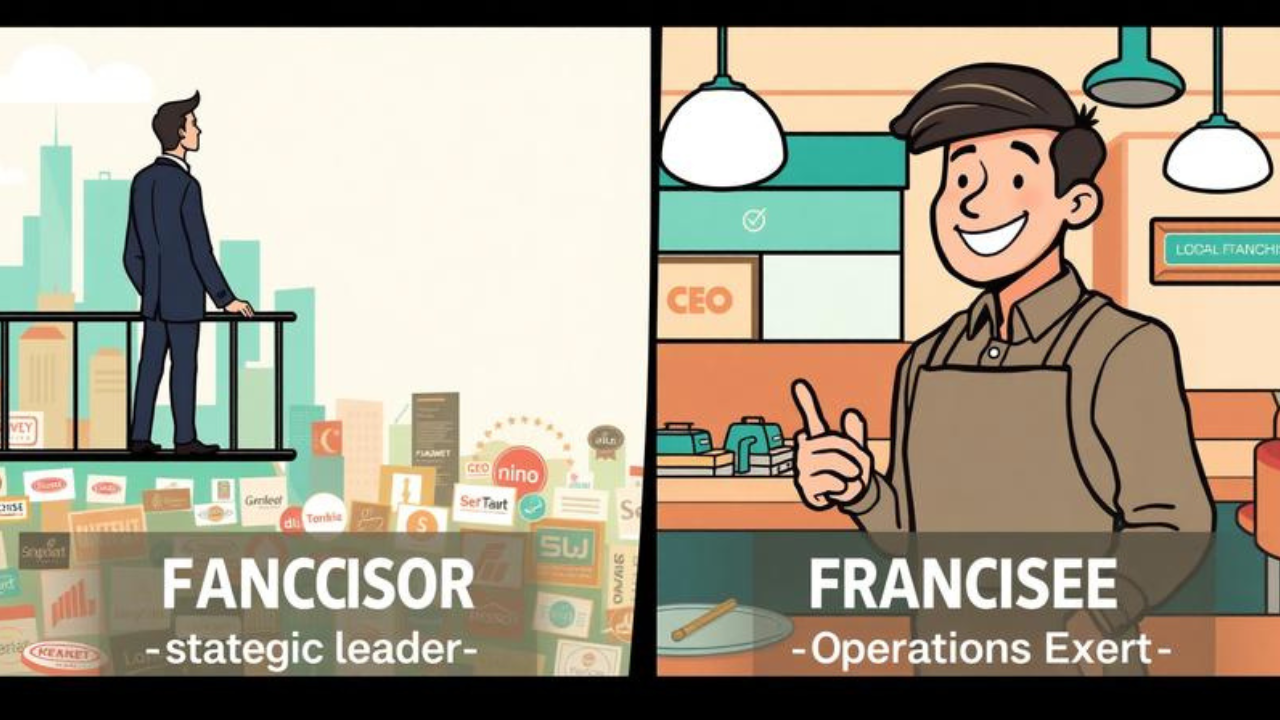
Let’s start with the basics. A franchisor is the person or company that owns the brand, trademarks, and entire business system. They’re the ones who built the recipe, designed the logo, and figured out what works. Think of them as the architect—they drew the blueprints.
A franchisee, on the other hand, is the individual or business that purchases the right to operate under that established brand. They’re the contractor who builds the house using those blueprints. They invest their own money, hire their own team, and run the day-to-day operations—all while following the franchisor’s rules.
Here’s a real-world example: McDonald’s Corporation is the franchisor. They own the golden arches, develop new menu items, and run global ad campaigns. The local McDonald’s on Main Street? That’s owned by a franchisee who pays fees, follows the system, and manages the daily grind.
The role of franchisor and franchisee is like a dance. One leads, the other follows—but both need to move in sync for the performance to work.
Why Does the Franchisor-Franchisee Model Matter?
Franchising isn’t just a business model—it’s a growth engine. In 2026, the number of franchise establishments is expected to hit 845,000 units, creating over 150,000 new jobs. But why does this matter to you?
-
Lower failure rate: Independent startups have a high failure rate. Franchises come with a proven playbook that dramatically reduces risk.
-
Instant brand recognition: You don’t spend years building a name from scratch. Customers already know and trust the brand.
-
Shared marketing power: Franchisors run national campaigns that drive customers to your door. You get the benefit without the million-dollar price tag.
-
Training and ongoing support: Franchisors provide initial training and continuous guidance on operations, marketing, and technology.
-
Bulk buying power: Franchisees get access to established supply chains and discounted pricing that independent owners can’t match.
-
Scalability without massive capital: Franchisors can expand rapidly without needing to finance every new location themselves.
According to the International Franchise Association, child services and commercial/residential services are the fastest-growing sectors in 2026, with year-over-year growth of 3.2%. The model works—and it’s only getting bigger.
Roles and Responsibilities – Who Does What?
Understanding the role of franchisor and franchisee means getting specific about who handles what. Let’s break it down.
Franchisor Responsibilities
The franchisor is the strategic brain of the operation. Their job is to build and protect the brand while giving franchisees the tools they need to succeed.
-
Develop and maintain the brand: This includes trademarks, marketing materials, and the overall business identity.
-
Create the business model: They design the operational systems, procedures, and standards that franchisees must follow.
-
Provide training: Franchisors offer comprehensive training on how to run the business, from opening day to ongoing operations.
-
Offer ongoing support: This includes guidance on operations, marketing strategies, product updates, and troubleshooting.
-
Lead national marketing: They run large-scale campaigns that promote the brand at a national or regional level.
-
Conduct research and development: Franchisors innovate—developing new products, services, and systems to keep the brand competitive.
-
Enforce quality standards: They set and enforce operational rules to maintain consistency across all locations.
Franchisee Responsibilities
The franchisee is the operational muscle. You’re on the ground, running the business day in and day out.
-
Pay fees and royalties: Franchisees pay an initial franchise fee and ongoing royalties (usually a percentage of sales).
-
Manage daily operations: This includes hiring staff, handling customer service, managing inventory, and overseeing finances.
-
Follow the system: You must adhere to the franchisor’s operational procedures and brand guidelines.
-
Implement local marketing: While the franchisor handles national ads, you’re responsible for local marketing to drive foot traffic.
-
Maintain quality standards: You must uphold the brand’s quality and customer experience standards.
-
Report performance: Franchisees regularly report financial performance and other data to the franchisor.
| Responsibility | Franchisor | Franchisee |
|---|---|---|
| Brand ownership | Owns the brand | Uses the brand |
| Business model creation | Designs the system | Follows the system |
| Daily operations | Oversees from afar | Runs the location |
| Hiring staff | No | Yes |
| National marketing | Leads | Supports locally |
| Fees and royalties | Receives | Pays |
| Training | Provides | Receives |
| Quality enforcement | Sets standards | Follows standards |
How to Succeed in Your Franchise Role
Whether you’re a franchisor building an empire or a franchisee running a location, success comes down to execution. Here’s a step-by-step guide to crushing your role.
Step 1: Understand your role completely
Read the franchise agreement and operations manual cover to cover. Know exactly what’s expected of you—and what you can expect from the other side.
Step 2: Communicate constantly
The franchisor-franchisee relationship thrives on open communication. Schedule regular check-ins, share challenges, and celebrate wins together.
Step 3: Follow the system (don’t reinvent it)
The model works because it’s proven. Whether you’re a franchisor enforcing standards or a franchisee executing them, trust the process.
Step 4: Invest in your people
Franchisees: hire well and train constantly. Franchisors: support your franchisees with ongoing training and resources. Great teams build great brands.
Step 5: Embrace technology
In 2026, success depends on balancing technology and people. Use AI and automation to streamline operations without losing the human touch.
Step 6: Plan for growth
Successful single-unit franchisees often become multi-unit operators. Franchisors should have a clear roadmap for adding new locations. Think long-term.
Step 7: Stay compliant
Franchisees must follow all legal and regulatory requirements. Franchisors must provide accurate Franchise Disclosure Documents (FDDs) and operate ethically.
Common Myths About Franchisor and Franchisee Roles
Let’s bust some misconceptions that trip up aspiring business owners:
Myth 1: “Franchisees have no freedom.”
Truth: You actually have significant operational independence. You make key decisions about hiring, scheduling, and local marketing. Yes, you follow brand guidelines—but you’re still the boss of your location.
Myth 2: “Franchisors just sit back and collect checks.”
Truth: A good franchisor is deeply invested in their franchisees’ success. They provide training, marketing, and ongoing support because their revenue depends on thriving locations.
Myth 3: “Franchising is a guaranteed win.”
Truth: No business is guaranteed. Franchisees can lose money if they don’t execute well. Success depends on your effort, not just the brand name.
Myth 4: “The franchisor handles everything.”
Truth: The franchisor provides the framework, but the franchisee handles daily operations—hiring, customer service, inventory, and payroll. Both roles require serious work.
Myth 5: “You need to be rich to become a franchisee.”
Truth: While some franchises require significant capital, many asset-light service models have lower entry points. Do your research.
Expert Tips for Nailing Your Role
Here are five actionable tips from franchise industry pros:
-
Do your due diligence. Review the Franchise Disclosure Document (FDD) carefully and get independent legal and financial advice before signing anything.
-
Build trust early. The ideal franchisor-franchisee relationship is based on trust, transparency, and a shared vision.
-
Speak to existing franchisees. They’ll give you the real scoop on support, profitability, and challenges.
-
Focus on local execution. National marketing drives awareness, but local marketing drives sales. Own your territory.
-
Never stop learning. Attend franchise conferences, participate in training, and stay updated on industry trends.
Frequently Asked Questions
What is a franchisor in simple terms?
A franchisor is the company or person that owns a business brand and system. They grant others (franchisees) the right to operate under their name in exchange for fees. Think of them as the brand owner who provides the blueprint for success.
What are the main franchisee responsibilities?
Franchisees are responsible for paying fees, managing daily operations, hiring staff, following brand standards, and executing local marketing. They invest their own capital and run the business day-to-day while adhering to the franchisor’s system.
How do you pronounce franchisee?
Franchisee is pronounced fran-chigh-ZEE (IPA: /ˌfræntʃaɪˈziː/). Break it down: “fran” (like “France”), “chigh” (rhymes with “eye”), and “ZEE” (like the letter Z). Say it with confidence—you’ve earned itConclusion
Let’s wrap up the three most important takeaways about the role of franchisor and franchisee:
-
The franchisor builds the brand and system; the franchisee operates it locally. One is strategic, the other is operational—and both are essential.
-
Responsibilities are clearly divided: Franchisors handle brand development, training, and national marketing. Franchisees manage daily operations, staffing, and local marketing.
-
Success comes from following the system and communicating openly. Whether you’re the franchisor or the franchisee, trust, transparency, and execution make the partnership work.
Franchising is booming in 2026—over 845,000 locations, $920 billion in output, and 8.9 million jobs. The opportunity is real. The question is: are you ready to step into your role?
Start today. Research your options, talk to real franchisees, and take that first step. And if you’re already in the game—what’s the best advice you’d give to someone just starting out? Drop it in the comments below.
See Also OUR THIS Guide O n Franchisee vs Franchisor: Easy Guide to Both Roles