
Introduction
Ever walked into a McDonald’s and wondered who actually owns the place? Is it the giant corporation, or some local business owner you’ve never met? The answer is both—and neither. That’s the fascinating reality of the franchisee vs franchisor relationship, and it’s one of the most powerful business models on the planet.
In 2026, the franchise industry is projected to exceed $920 billion in economic output, with nearly 8.9 million jobs created across the U.S. alone. But behind those massive numbers are real people trying to figure out one simple question: Am I better off as a franchisor or a franchisee?
By the end of this guide, you’ll know exactly what each role entails, the four main types of franchises, and which path might be right for you. No jargon, no fluff—just the honest breakdown you need.
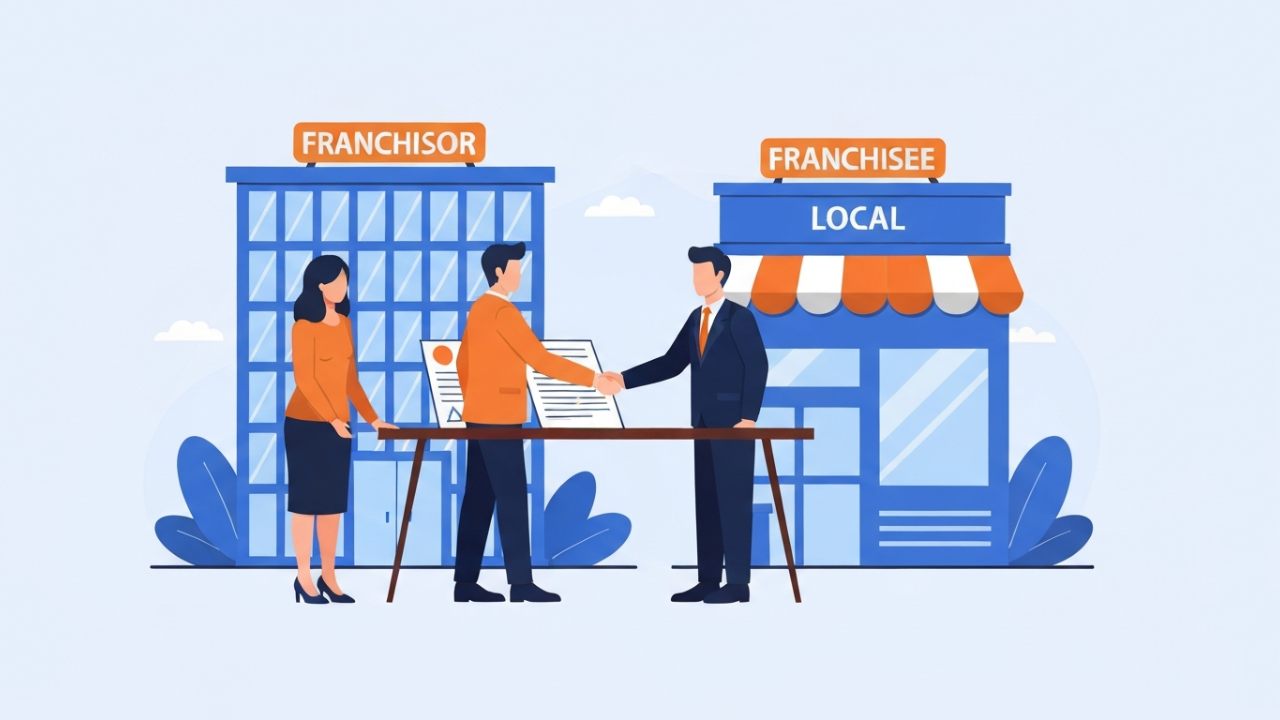
Table of Contents
-
What Is Franchising? A Simple Introduction
-
Why Does the Franchise Model Matter? Key Benefits
-
The 4 Types of Franchise – Which One Fits You?
-
How to Choose Between Franchisor and Franchisee Roles
-
Common Myths About Franchising – Busted
-
Expert Tips for Franchise Success in 2026
-
Frequently Asked Questions
What Is Franchising? A Simple Introduction
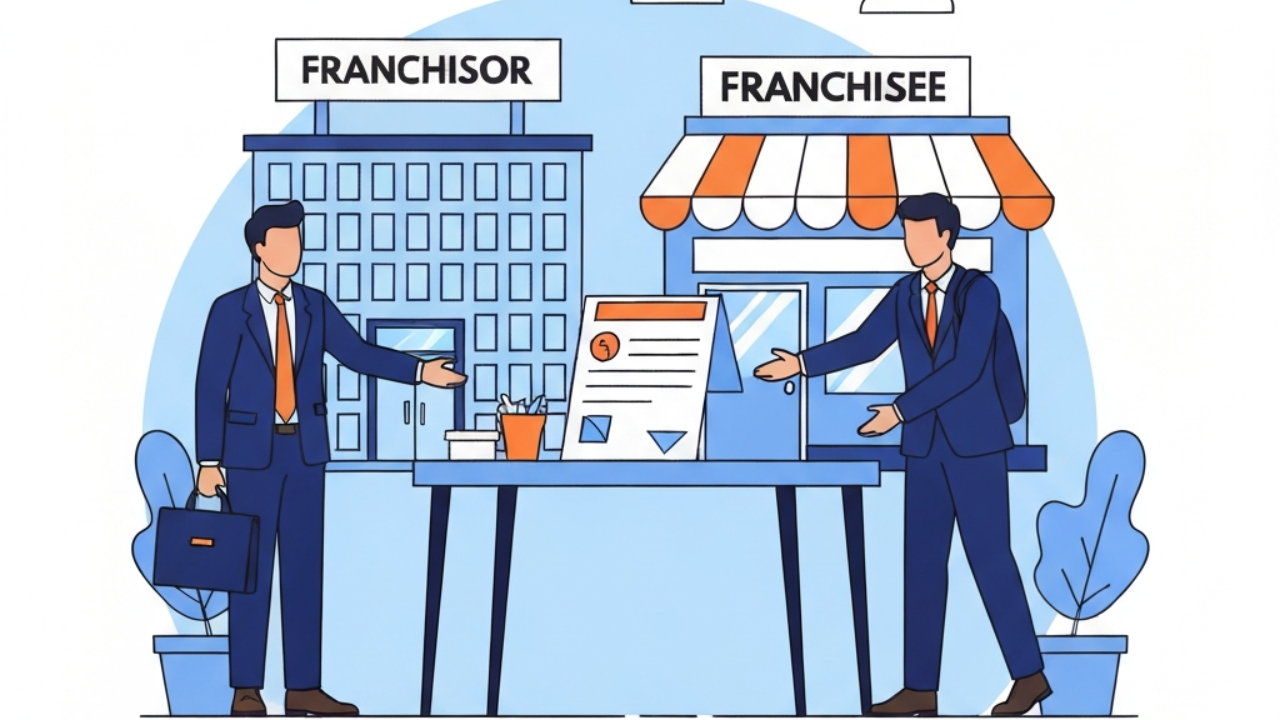
Let’s start with the basics. A franchise is a business arrangement where one party (the franchisor) grants another party (the franchisee) the right to use its brand, systems, and business model in exchange for fees. Think of it like this: the franchisor built the recipe, and the franchisee gets to cook from it.
The franchisor is the original brand owner. They’ve developed a proven business model, established a recognizable name, and created operational systems that work. Their job is strategic—they set the standards, protect the brand, and provide the tools franchisees need to succeed.
The franchisee, on the other hand, is the entrepreneur who purchases the right to operate under that existing brand. You’re not starting from scratch. Instead, you’re stepping into a model that’s already been built and tested. You hire staff, manage daily operations, handle local finances, and take on the financial risk of your location.
Here’s a real-world example: McDonald’s is the franchisor. They own the brand, develop new menu items, and run national ad campaigns. The local McDonald’s down the street? That’s owned by a franchisee who follows corporate standards, sources approved ingredients, and manages the daily grind.
The franchisee vs franchisor dynamic is a partnership. One provides the blueprint; the other builds the house.
Why Does the Franchise Model Matter? Key Benefits
Franchising isn’t just popular—it’s exploding. The International Franchise Association projects over 12,000 new franchised businesses in 2026 alone. But why do so many people choose this path?
-
Lower failure rate: Starting an independent business is risky. Franchises come with a proven playbook, which dramatically reduces the odds of failure.
-
Instant brand recognition: You don’t have to spend years building a name from nothing. Customers already know and trust the brand.
-
Training and support: Franchisors provide initial training, ongoing coaching, and operational resources you’d otherwise have to figure out yourself.
-
Bulk buying power: Franchisees often get access to established supply chains and discounted pricing that independent owners can’t match.
-
Shared marketing: National or regional ad campaigns are funded and managed by the franchisor, driving customers to your door.
-
Scalability: For franchisors, this model allows rapid expansion without needing to raise massive capital for every new location.
And here’s a stat that hits home: two-thirds of franchise executives expect strong growth in 2026, with large brands growing 3.6x faster than smaller ones. The franchise model isn’t just surviving—it’s thriving.
The 4 Types of Franchise – Which One Fits You?
Not all franchises are created equal. There are four main types of franchise arrangements, each with its own structure, investment level, and level of control. Here’s the breakdown:
Single-Unit Franchise
This is the most common type. You invest in one location and operate it as an owner. There’s no expectation to open more, though many franchisees eventually do. Perfect if you want to be hands-on and keep things simple.
Multi-Unit Franchise
You sign agreements for multiple locations, either in the same region or spread out. Many franchisees start with one unit and expand once they’ve found their groove. Higher investment, but also higher profit potential.
Area Development Franchise
Under an Area Development Agreement (ADA) , you commit to opening a specific number of franchises in a designated territory within a set timeframe. You get exclusive rights to that region and can operate the units yourself or find other operators (though you can’t sub-franchise).
Master Franchise
This is the big leagues. A master franchisee acts almost like a mini-franchisor. You buy the rights to an entire territory and can sub-franchise to other franchisees—meaning you collect fees and provide support just like the original franchisor. You’re responsible for opening at least one location yourself and training your sub-franchisees.
| Type | Investment | Control | Best For |
|---|---|---|---|
| Single-Unit | Low to Medium | High (one location) | First-time owners |
| Multi-Unit | Medium to High | Medium (multiple locations) | Experienced operators |
| Area Development | High | Medium (territory rights) | Regional expansion |
| Master Franchise | Very High | Very High (sub-franchise) | Experienced entrepreneurs |
How to Choose Between Franchisor and Franchisee Roles
Deciding between the franchisee vs franchisor path isn’t about which is “better”—it’s about which fits your skills, goals, and risk tolerance. Here’s a step-by-step process to figure it out:
Step 1: Assess your risk appetite
Are you comfortable with significant financial risk? Franchisors take on the cost of building the brand and systems. Franchisees invest upfront fees and ongoing royalties but get a proven model. If you want a safer bet, franchisee is your lane.
Step 2: Evaluate your operational skills
Do you love running day-to-day operations? Franchisees handle hiring, inventory, customer service, and local marketing. If you prefer strategy over execution, the franchisor role might be a better fit.
Step 3: Consider your capital
Franchisors need deep pockets to develop the brand and support franchisees. Franchisees need enough capital for the initial franchise fee (which can range widely) and ongoing costs. Be honest about what you can afford.
Step 4: Think about growth
Do you want to build one great business or an entire network? Franchisees can grow by adding more units. Franchisors grow by recruiting more franchisees. Both paths offer scaling, but the mechanics are very different.
Step 5: Talk to real people
Before you sign anything, speak with existing franchisees in similar locations. Ask about support, profitability, and the reality of the franchisee vs franchisor relationship. Their answers will tell you more than any brochure.
Common Myths About Franchising – Busted
Let’s clear up some misconceptions that trip up aspiring business owners:
Myth 1: “Franchisees have no freedom.”
Truth: You actually have significant operational independence. You make key decisions about hiring, scheduling, and even some pricing. Yes, you follow brand guidelines, but you’re still the boss of your location.
Myth 2: “Franchising is a guaranteed win.”
Truth: No business is guaranteed. Franchisees can lose money or fail while the franchisor and other franchisees remain profitable. Success depends on your execution.
Myth 3: “Franchisors just collect checks.”
Truth: A good franchisor is genuinely invested in their franchisees’ success. They provide training, marketing, and ongoing support because their revenue depends on thriving locations.
Myth 4: “All franchises are fast food.”
Truth: Franchises exist in nearly every industry—from health and wellness to pet care, business services, and even mobile tutoring. In 2026, child services and commercial/residential services are the fastest-growing categories.
Myth 5: “You need to be rich to start.”
Truth: While some franchises require significant capital, many offer lower entry points. Some asset-light service models require far less upfront investment than traditional brick-and-mortar locations.
Expert Tips for Franchise Success in 2026
Here are five actionable tips from industry pros:
-
Do your due diligence. Review the Franchise Disclosure Document (FDD) carefully and get independent legal and financial advice before signing anything.
-
Communicate constantly. The franchisor-franchisee relationship thrives on clear, regular communication. Schedule check-ins and be transparent about challenges.
-
Embrace technology. In 2026, success depends on balancing technology and people. Use AI and automation to streamline operations without losing the human touch.
-
Follow the system. The model works because it’s proven. Don’t try to reinvent the wheel—execute the franchisor’s playbook with discipline.
-
Plan for growth. Whether you’re a franchisee or franchisor, always think long-term. Successful single-unit owners often transition into multi-unit operators, leveraging their expertise to scale.
Frequently Asked Questions
What is the main difference between a franchisor and a franchisee?
The franchisor owns the brand, develops the business model, and provides training and support. The franchisee purchases the right to operate under that brand, manages daily operations, and pays fees and royalties. One builds the system; the other runs it.
What are the 4 types of franchise?
The four main types are single-unit (one location), multi-unit (multiple locations), area development (exclusive territorial rights with a set number of units), and master franchise (sub-franchising rights in a territory). Each offers different levels of investment, control, and growth potential.
What are the roles of a franchisee?
A franchisee hires and manages staff, oversees daily operations, handles local finances and inventory, follows brand standards, and participates in local marketing. You’re an independent business owner who operates within the franchisor’s proven framework.
Conclusion
Let’s recap the three most important takeaways about the franchisee vs franchisor dynamic:
-
The franchisor builds the brand and system; the franchisee operates it locally. One is strategic, the other is operational—and both need each other to succeed.
-
There are four types of franchise—single-unit, multi-unit, area development, and master franchise. Choose the one that matches your capital, experience, and growth goals.
-
Success comes from following the system, communicating openly, and doing your homework. Whether you’re buying into a brand or building one, the principles are the same.
The franchise industry is booming in 2026, with over $920 billion in output and nearly 8.9 million jobs. The opportunity is real. The question is: are you ready to take it?
Start today. Research your options, talk to existing franchisees, and take that first step toward business ownership. And if you’re already in the game—what’s the best piece of advice you’d give to someone just starting out? Drop it in the comments below.